The Park
History of the park
Velcthi, Vulci, Olkion — a great Etruscan city that dominated the territory between the Tyrrhenian Sea and Mount Amiata.
Many theories have been put forward regarding the origins of the Etruscans. The prevailing one suggests that they came from the Aegean, and therefore had a maritime origin. The Etruscans would become expert seafarers, and it is no coincidence that many of their cities had a coastal character.
For the Etruscans it was Velcthi or Vel, for the Latins Vulci or Volci, and for the Greeks Olkion. It was a great Etruscan city that for many years dominated a vast territory extending between the Tuscan mining district, the Tyrrhenian Sea, Mount Amiata, and the Fiora Valley.
Developing from as early as the 10th century BC, the city reached the height of its splendour and territorial expansion in the 7th century BC, controlling both the coast and the inland area through the centres of Saturnia, Pitigliano, Castro, and Sovana, which formed part of its commercial network and territorial control system.
Vulci was part of the Etruscan Dodecapolis, the economic and military alliance of the twelve most important Etruscan cities, namely Vulci, Volterra, Volsinii, Veii, Vetulonia, Arezzo, Perugia, Cortona, Tarquinia, Caere, Chiusi, and Roselle.
The city began to develop as early as the Villanovan period, between the 9th and 8th centuries BC, and by the 7th century BC it had acquired an important defensive system characterised by massive walls. Its urban settlement spread across the plateau and the small adjoining rise of Pozziatella, between the ravines of the Fontanile di Giano and the Fiora River, over an area of as much as 125 hectares, demonstrating remarkable political and economic development.
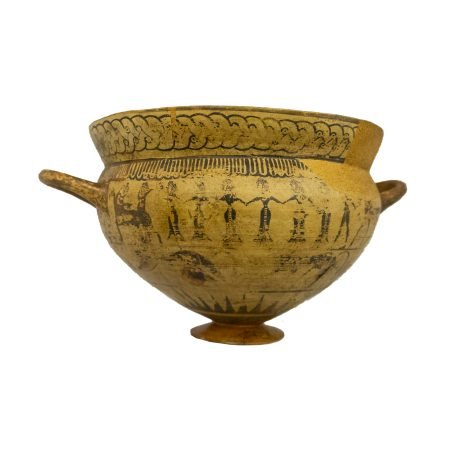
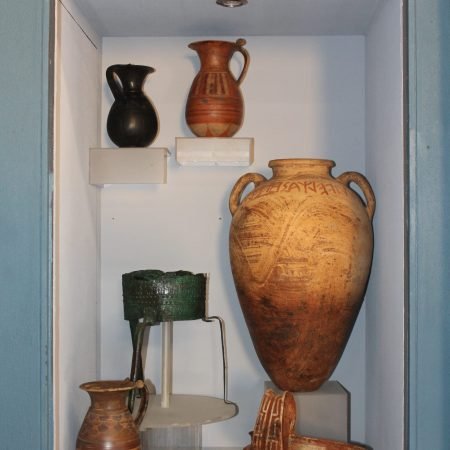
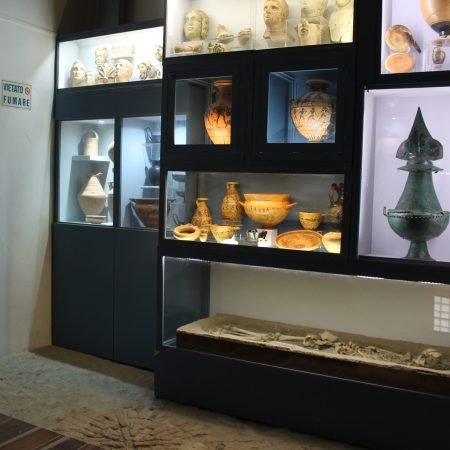
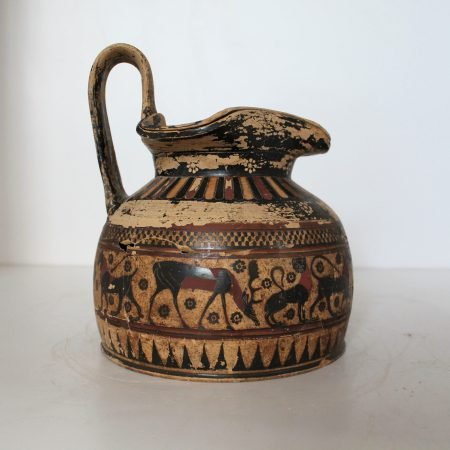
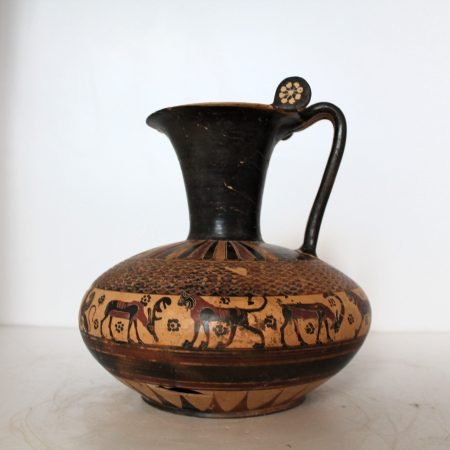
The clearest evidence of this development is its ceramic and coroplastic production, which reached outstanding levels of excellence between the 8th and 4th centuries BC. On 11 June 1965, the so called Tomb of the Bronze Chariot was discovered in the Osteria necropolis. This find, dating to the first quarter of the 7th century BC, attests to the transition from Villanovan culture to the Orientalising period.
The grave goods found inside the tomb were extremely rich and show that its owner held an important position, probably that of a military leader, as a ceremonial military chariot and weapons were found in the burial.
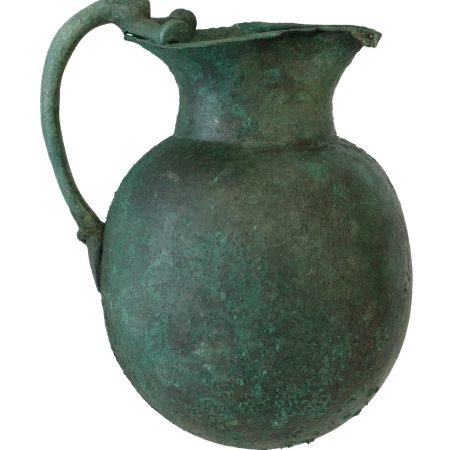
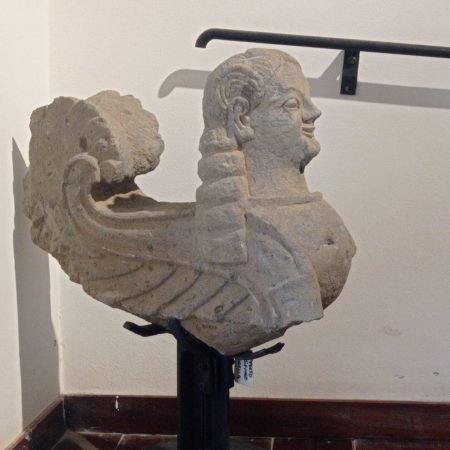
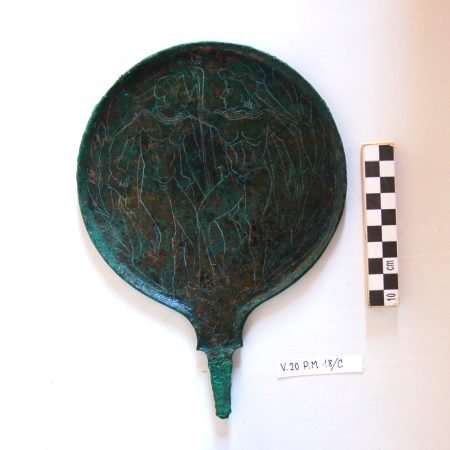
The city’s tombs and necropolises are practically countless and, moreover, were subjected to ruthless looting over time. It is no coincidence that museums all over the world display these very finds.
In 474 BC, the city’s political and economic development came to a halt. At Cumae, a naval battle took place between the Etruscans and the Syracusans. The victory of the latter brought an end to Etruscan expansion in southern Italy and marked the beginning of their decline.
Another adversary was also appearing on the horizon. Vulci eventually came into conflict with Roman expansionism, which culminated in 280 BC, when the city was definitively defeated and subjugated by the consul Tiberius Coruncanius. From that date onward, Vulci became Roman.
Today, access to the ancient city and its remains follows a gradual approach towards the westernmost gate, marked by the imposing remains of an aqueduct which, starting from the arches of the Badia Bridge, extends as far as the city gate just mentioned, then continuing along the clearly defined route marked by the paving stones of the decumanus. Overlooking this road are the principal monuments, mostly Roman, which were superimposed on the earlier Etruscan ones.
The decumanus links the Roman phase of the city from the West Gate to the East Gate, then continues towards the river, where one reaches the area of Ponte Rotto, where the remains of the piers that once supported the structure can still be seen, near a substantial embankment built of tufa blocks, together with the remains of a river landing place.
Climbing back up, one re-enters the urban area proper and, following the edge above the Fiora, which flows enclosed between two deep rock walls and creates spectacular scenery such as that of Lake Pellicone, one finally reaches the North Gate. Passing through the gate and leaving the city, one then follows the Fontanile ravine for a short distance as far as the Carraccio Tombs.
On the opposite bank of the Fiora, which cannot be crossed today, stand the monumental remains of the Coccumella and the François Tomb, perhaps the most famous burial monument for its frescoes. Numerous necropolises from the various phases of the territory are scattered throughout the area.
Photo gallery